5 Ways Real-Time Tracking Cuts Fleet Costs
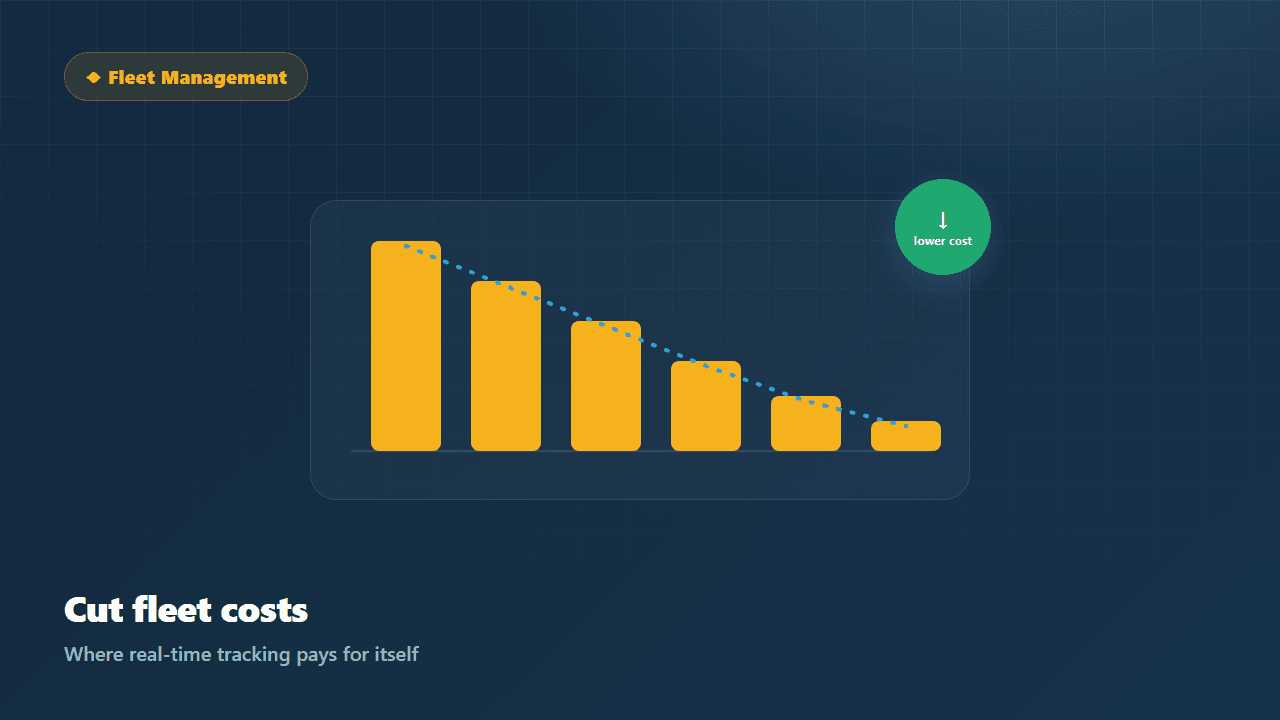
Fuel, idle time, wasted trips, surprise repairs — the costs that quietly drain a fleet rarely show up on a single invoice. Real-time tracking makes them visible, and visibility is the first step to cutting them. Here are five places it pays for itself.
1. Cut idle time
An engine running while a vehicle goes nowhere burns fuel, adds engine hours, and shortens service intervals. Because our trackers read engine data over OBD, idling shows up as its own event — not just a vehicle that stopped moving. Once you can see who idles, where, and for how long, you can actually do something about it.
2. Tighten routing and dispatch
Live location lets dispatch send the closest vehicle, reroute around problems, and give customers accurate arrival times instead of guesses. Fewer wasted kilometres means less fuel, less wear, and more jobs per day from the same fleet.
3. Catch fuel waste
OBD fuel level and consumption data, paired with trip and idle reports, makes unusual fuel use obvious — long idles, heavy-footed driving, or trips that never should have happened. Small percentages recovered across a whole fleet add up quickly.
4. Prevent breakdowns before they happen
A roadside breakdown costs far more than the repair — there is the tow, the missed work, and the knock-on delays. Because the platform reads real odometer, engine hours, and diagnostic trouble codes straight from the vehicle, maintenance is scheduled on real usage and early fault codes surface before they become failures.
5. Prove the work
Trip history and route replay settle "were you there?" disputes in seconds and back up your invoices with a clear record. Fewer disputes, faster payment, and a defensible answer whenever a customer or insurer asks.
It adds up fast
None of these savings is dramatic on its own. Multiplied across every vehicle, every day, they are the difference between a fleet that leaks money and one that runs tight.
The bottom line
Real-time tracking is not an expense so much as a way to find money you are already losing. The fastest way to see where it would pay off on your fleet is a short, personalized demo.
Explore the platform
Always ON Tracking Team
Fleet & Telematics
The Always ON Tracking team builds real-time GPS and OBD tracking for fleet and asset owners who want clear visibility and control over their operations.
Related posts
All articlesHow to Recover a Stolen Vehicle with GPS Tracking
A plug-in GPS tracker won’t stop a thief — but live location plus tamper, tow, and unauthorized-movement alerts help you detect the theft fast, locate the vehicle, and hand police the real-time position they need to recover it.
5 min readGuidesDo You Have to Tell Employees About GPS Tracking? A Canadian Overview
A plain-language look at employee GPS tracking law in Canada: why notice and a written policy matter under PIPEDA and provincial privacy norms, and how to keep vehicle tracking limited to legitimate work purposes.
6 min readFleet ManagementFleet GPS Tracking in Ontario & Canada: What to Know
A practical guide for Canadian fleets weighing GPS tracking — why a Canadian-based provider, PIPEDA-aligned data handling, nationwide cellular coverage, cold-weather reliability, and bilingual support all matter, and how Always ON Tracking fits.
6 min readSee Always ON Tracking in action
Get a personalized demo and a hardware + install quote tailored to your fleet.