GPS vs. OBD Tracking: What's the Difference (and Why It Matters)
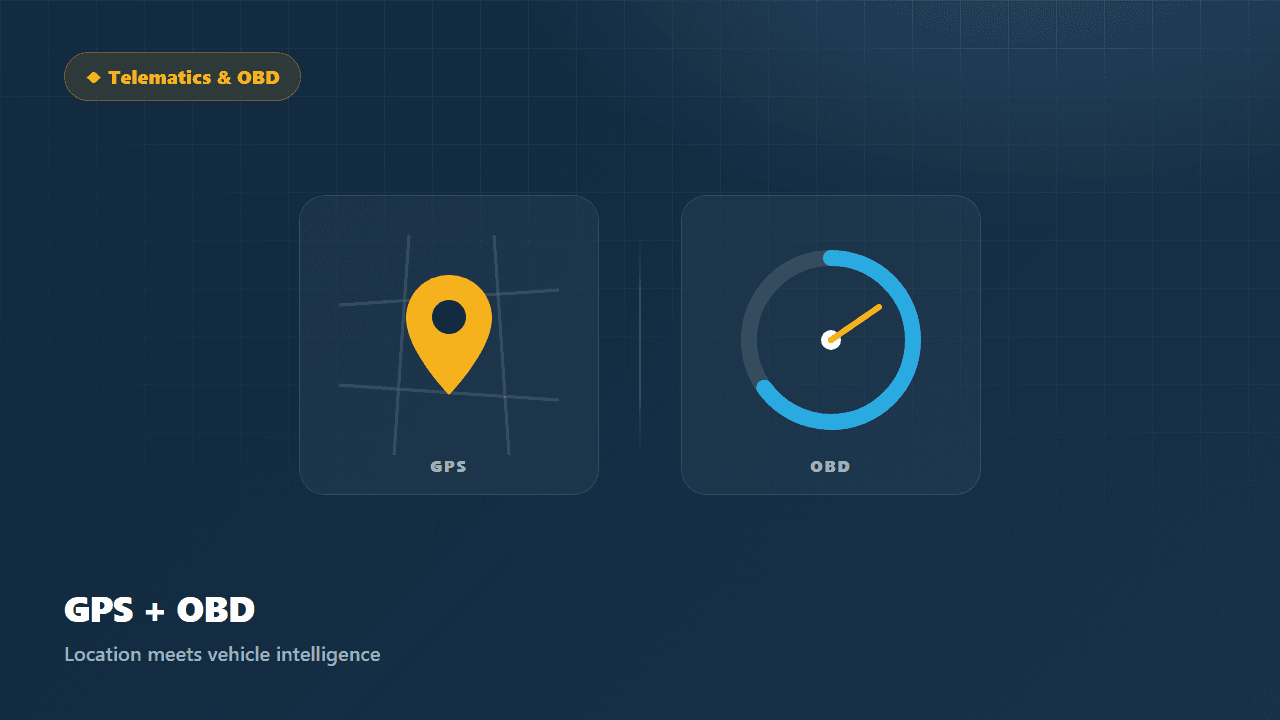
If you're shopping for fleet tracking, you'll hear two terms a lot: GPS tracking and OBD tracking. They sound similar, but the difference has a real impact on what you can see and do with your vehicles.
What GPS-only tracking gives you
A basic GPS device reports location, speed, and movement. That's enough to see where a vehicle is and where it's been — useful, but it stops at the surface.
What OBD tracking adds
An OBD device plugs into the vehicle's diagnostic port and reads the vehicle's own data: engine RPM, fuel level, coolant temperature, odometer, VIN, and diagnostic trouble codes (DTCs). Now you're not just tracking a dot on a map — you're seeing the health and behavior of the vehicle itself.
- Real mileage & engine hours
- Fuel level & consumption
- Engine temperature & RPM
- Fault codes (early warning)
- VIN, make/model/year
Why it matters for your fleet
OBD data turns tracking into management — accurate maintenance scheduling, real fuel insight, early fault detection, and better resale records.
Tracking becomes management
The moment you can read engine hours, fuel, and fault codes, a tracking tool stops being a map and starts being an operations system.
Which should you choose?
If you only need to know where something is, GPS-only works. If you want to actually manage cost, uptime, and risk, OBD tracking pays for itself. Always ON Tracking uses OBD trackers so you get both — location and vehicle intelligence — in one platform.
You get both — location and vehicle intelligence — in one platform.
The bottom line
GPS answers "where?" OBD answers "where, how, and how healthy?" For most fleets, that deeper layer is the difference between watching vehicles and actually running them well. If you want to see vehicle-level intelligence on your own fleet, the best next step is a quick personalized demo.
Explore the platform
Always ON Tracking Team
Fleet & Telematics
The Always ON Tracking team builds real-time GPS and OBD tracking for fleet and asset owners who want clear visibility and control over their operations.
Related posts
All articlesHow to Recover a Stolen Vehicle with GPS Tracking
A plug-in GPS tracker won’t stop a thief — but live location plus tamper, tow, and unauthorized-movement alerts help you detect the theft fast, locate the vehicle, and hand police the real-time position they need to recover it.
5 min readGuidesDo You Have to Tell Employees About GPS Tracking? A Canadian Overview
A plain-language look at employee GPS tracking law in Canada: why notice and a written policy matter under PIPEDA and provincial privacy norms, and how to keep vehicle tracking limited to legitimate work purposes.
6 min readFleet ManagementFleet GPS Tracking in Ontario & Canada: What to Know
A practical guide for Canadian fleets weighing GPS tracking — why a Canadian-based provider, PIPEDA-aligned data handling, nationwide cellular coverage, cold-weather reliability, and bilingual support all matter, and how Always ON Tracking fits.
6 min readSee Always ON Tracking in action
Get a personalized demo and a hardware + install quote tailored to your fleet.