How Geofencing Prevents Theft and Unauthorized Use
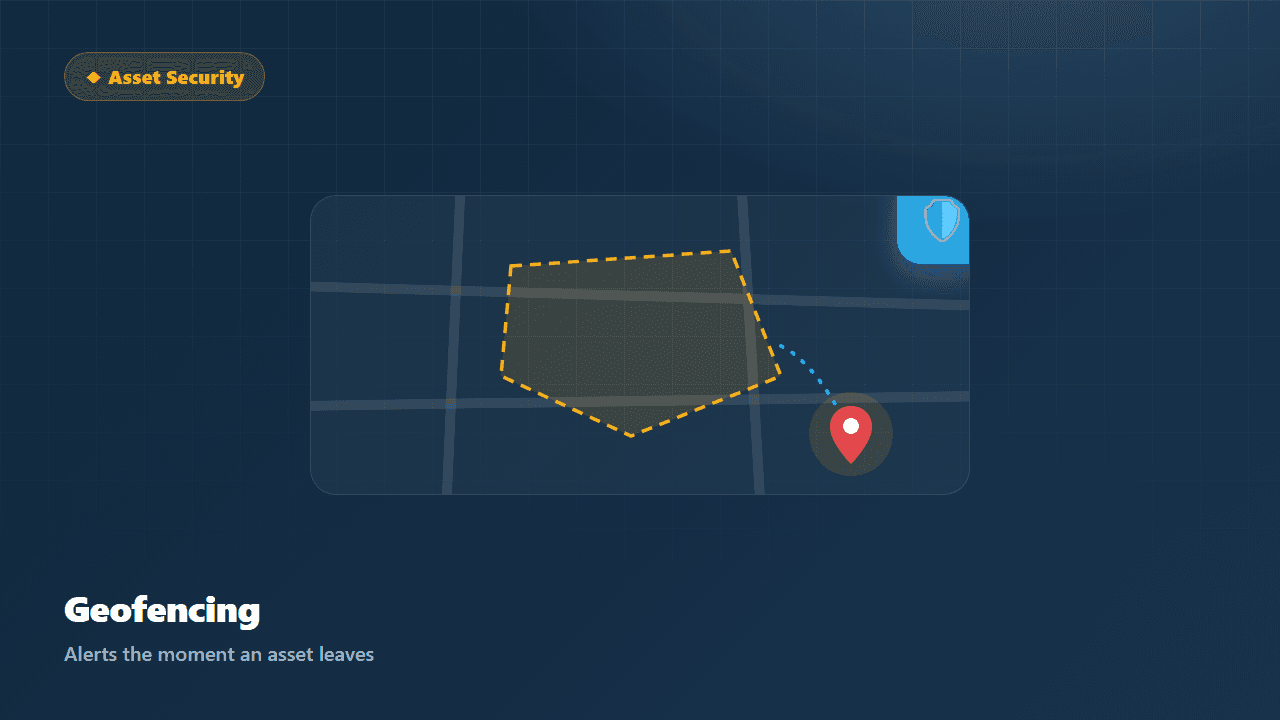
A geofence is a simple idea with a big payoff: draw a boundary on the map, and the platform tells you the moment an asset crosses it. For theft and unauthorized use, that early warning is often the difference between recovering an asset and losing it.
What a geofence actually is
A geofence is a virtual boundary around a place that matters to you — a yard, a job site, a depot, or a whole region. You draw the zone once, choose whether you care about vehicles entering, leaving, or both, and the platform watches it around the clock.
How it deters theft and misuse
Most theft and unauthorized use happens outside normal hours, when nobody is watching. A geofence does not sleep. The instant an asset leaves where it is supposed to be — or moves when it should be parked — you get an alert on screen, by email, and by SMS.
- Enter / exit alerts on any zone
- After-hours movement warnings
- Unauthorized-use detection
- Tow and unexpected-movement alerts
From alert to recovery
An alert is only useful if you can act on it. Because every asset is tracked live by GPS, a geofence alert comes with a location you can follow in real time and share with your team or the authorities to recover the asset quickly. The platform is built to detect, locate, and help you recover — it does not disable or immobilize vehicles.
Detect, locate, recover
Geofencing turns a boundary into an early-warning system: you find out immediately, you see where the asset is going, and you can move to get it back.
Setting up zones that work
The best geofences match how you actually operate: tight zones around yards and sites where assets should stay put, and broader rules for regions they should never leave. A few well-placed zones catch far more than a map covered in overlapping boundaries.
The bottom line
Geofencing is one of the simplest, highest-value tools in fleet security — quiet until it matters, then instant when it does. A short demo is the easiest way to see it protecting the places and assets that matter to you.
Explore the platform
Always ON Tracking Team
Fleet & Telematics
The Always ON Tracking team builds real-time GPS and OBD tracking for fleet and asset owners who want clear visibility and control over their operations.
Related posts
All articlesHow to Recover a Stolen Vehicle with GPS Tracking
A plug-in GPS tracker won’t stop a thief — but live location plus tamper, tow, and unauthorized-movement alerts help you detect the theft fast, locate the vehicle, and hand police the real-time position they need to recover it.
5 min readGuidesDo You Have to Tell Employees About GPS Tracking? A Canadian Overview
A plain-language look at employee GPS tracking law in Canada: why notice and a written policy matter under PIPEDA and provincial privacy norms, and how to keep vehicle tracking limited to legitimate work purposes.
6 min readFleet ManagementFleet GPS Tracking in Ontario & Canada: What to Know
A practical guide for Canadian fleets weighing GPS tracking — why a Canadian-based provider, PIPEDA-aligned data handling, nationwide cellular coverage, cold-weather reliability, and bilingual support all matter, and how Always ON Tracking fits.
6 min readSee Always ON Tracking in action
Get a personalized demo and a hardware + install quote tailored to your fleet.